you are not logged in



- Regional water observation mechanism
- Regional Cooperation Assessment
- Water Quality Monitoring (JP)
- Water scarcity and drought (JP)
- Groundwater (JP)
- Waste water reuse (JP)
- Shared Water Resources Management (JP)
- Linking rural development and water management (JP)
- Waste management
- Water institutions
- Climate Change
- Floods
- Desalination
- Right to Water
- Irrigation
- Satellite data
- Water reports & data
- Hydrology
- Sanitation
- Gender and IWRM
- ArabWAYS
- Non-Revenue Water
- Virtual Water & Water Footprint
- WANA Water Panel
- Water Demand
- Water Governance
- Water Pricing
- Water accounts
- Water nexus Energy
- Geosciences
- Rural Management




 Floods
Definition: An unusual accumulation of water above the ground caused by high tide, heavy rain, melting snow or rapid runoff from paved areas. (EEA)
Floods usually are local, short-lived events that can happen suddenly, sometimes with little or no warning. They usually are caused by intense storms that produce more runoff than an area can store or a stream can carry within its normal channel. Rivers can also flood when dams fail, when ice jams or landslides temporarily block a channel, or when snow melts rapidly. In a broader sense, normally dry lands can be flooded by high lake levels, by high tides, or by waves driven ashore by strong winds. Small streams, particularly in the Southwest, are subject to flash floods (very rapid increases in runoff), which may last from a few minutes to a few hours. On larger streams, floods usually last from several hours to a few days. A series of storms might keep a river above flood stage (the water level at which a river overflows its banks) for several weeks.
Floods can occur at any time, but weather patterns have a strong influence on when and where floods happen. Natural processes, such as hurricanes, weather systems, and snowmelt, can cause floods. Failure of levees and dams and inadequate drainage in urban areas can also result in flooding. On average, floods kill about 140 people each year and cause $6 billion in property damage.
Although loss of life to floods during the past half-century has declined, mostly because of improved warning systems, economic losses have continued to rise due to increased urbanization and coastal development.
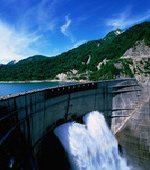
Flood-control dams have been built on many streams and rivers to store storm runoff and reduce flooding downstream. Although the same volume of water must eventually move down the river, the peak flow (the largest rate of streamflow during a flood) can be reduced by temporarily storing water and releasing it when river levels have fallen. Levees are artificial river banks built to control the spread of flood waters and to limit the amount of land covered by floods. Levees provide protection from some floods but can be over-topped or eroded away by large floods.