|
Water Information Systems, Wednesday 18/03 - 19:00 - 21:00 at the French Pavilion - ONEMA
|
|
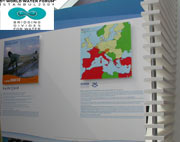
The Mediterranean session Agenda
|
|
Topic 3.1 on Basin Management and Transboundary Cooperation
|
|
V World Water Forum- SPAIN INVITES YOU- L'ESPAGNE VOUS INVITE
|
|
Forum Mondial de l'Eau d'Istanbul - INVITATION - session parallèle sur « la formation aux métiers de l'eau et le renforcement des compétences »- 17 Mars 2009 à 13H00 - Espace France - Sutluce
|
|
invitation-forum-mondial-de-leau-distanbul-
Item only translated in
French
|
|
Official Session EUROPE on the 5th World Water Forum
|
|
Arab Region Activities at the 5th World Water Forum - Istanbul (16-22 March, 2009)
|
|
istanbul-le-ps-eau-au-5eme-forum-mondial-de-leau
Item only translated in
French
|
|
programme-gestion-de-bassin-et-cooperation
Item only translated in
French
|
|
rapports-prepares-par-henri-smets-pour-istanbul
Item only translated in
French
|
|
5th World Water Forum - Topic 4.1: Implementing the Right to Water and Sanitation for Improved Access
|
|
AquaFed at the World Water Forum "Bridging the real water divide between haves and have-nots"
|
|
Global Water Partnership at the 5th World Water Forum
|
|
Istanbul Water Tribunal, 10-14.3.2009
|
|
SESSION 6.1.1. - KNOWLEDGE FOR ALL, ALL FOR KNOWLEDGE
|
|
Side event: Water Resources across Europe – confronting Water Scarcity and Drought
|
|
lettre-dinformation-n4-du-pfe-au-forum-distanbul
Item only translated in
French
|
|
5th WWF main session summaries
|
|
5th World Water Forum: Forum Survey
|
|
AFESD awarded King Hassan II Great Water Prize
Director General of the
Arab Fund for Economic and Social Development (AFESD), Abdulatif
Youssef al-Hamad, was awarded, here on Monday, the King Hassan II Great
World Water Prize for his efforts and achievements in promoting
cooperation in water management.
The 100,000 dollar prize was awarded by Morocco's Prime Minister, Abbas
el-Fassi, who is representing king Mohammed VI at the 5th World Water
Forum, held in the Turkish capital on March 16 through 22, under the
theme "Bridging divides for water".
The awarding ceremony took place at the opening of the forum,
and was attended by Turkish President, Abdullah Gul, Iraqi President,
Jalal Talabani, Dutch and Japanese Crown princes, president of the
World Water Council, Loic Fauchon.
A documentary on Morocco's water management policy and infrastructure was screened at the ceremony.
Speaking at the event, el Fassi highlighted the new projects
undertaken by the north African country in the field of water
management, notably the construction of new dams and the launch of
development projects aimed to rationalize water consumption and
preserve hydraulic resources.
For his part, Youssef al-Hamad underscored the pioneer actions
taken by late King Hassan II in the field of hydraulic policies, adding
that Morocco has become an example to follow in the field of water
management.
He recalled that AFESD has contributed to funding some 15 dams in Morocco with a total capacity of 7 billion cubic meters.
Presented every three years, the award was established in 2000
jointly by the government of Morocco and the World Water Council in
memory of late King Hassan II distinguished actions and encouragement
of international cooperation and sound management of water resources.
It is granted to institutions, organizations, or individuals in
recognition of their outstanding achievements in any aspects of water
resources.
The 5th World Water Forum will address the means to preserve
hydraulic resources, water management and the means to take up the
challenges of water scarcity and climate change.
Some 20,000 officials, public and private operators,
associations activists from over 100 countries are expected to attend
the forum whose first edition was held in Marrakech in 1997.
--
The Arab Fund for Economic and Social Development (AFESD) is an autonomous regional Pan-Arab development finance organization, ("the Fund"). Its membership consists of all states who are members of the League of Arab States.
|
|
Access to Water: A Human Right or a Human Need?
Twenty countries have officially challenged the Ministerial Declaration released Sunday at the close of the week-long World Water Forum because it defines water as a human need rather than as a human right.
Latin American states played a key role in gathering signatures on a counter-declaration that recognizes access to water and sanitation as a human right and commits to all necessary action for the progressive implementation of this right.
Countries that signed the counter-declaration are: Bangladesh, Benin, Bolivia, Chad, Chile, Cuba, Ecuador, Ethiopia, Guatemala, Honduras, Morocco, Namibia, Niger, Panama, Paraguay, South Africa, Spain, Sri Lanka, Uruguay and Venezuela. Switzerland has declared its support although a formal signature is expected to take months to finalize.
The U.S. delegation, led by Daniel Reifsnyder, deputy assistant secretary of state for environment and sustainable development, took the position that "there is at present no internationally agreed right to water or human right to water, and there is no consensus on what such a right would encompass," according to State Department spokesman Andy Laine.
The Ministerial Declaration was not open to negotiation at the World Water Forum as negotiations on the statement were concluded at a preparatory meeting held in Paris on March 3 and 4.
Laine told ENS that during the preparatory process the United States did oppose language that would have recognized water as a human right.
"The United States does not oppose any government adopting a national right to water or sanitation as part of its own domestic policy. We do, however, have concerns with a statement that would require all countries to adopt a national right to water or sanitation or would establish an international right to water or sanitation," Laine said.
"Establishing an international right to anything raises a number of complicated issues regarding the nature of that right, how that right would be enforced, and which parties would bear responsibility for ensuring these rights are met," said Laine. "To date, there have been no formal intergovernmental discussions on these issues. It would therefore be premature to agree to such a right."
Other governments supporting the principle of water as a human need, rather than are human right, are Brazil, Canada, Egypt and the European Union.
Nongovernmental organizations and the United Nations have mounted a campaign to lobby governments to recognize water as a human right.
In Istanbul last Friday, Philipp Terhorst of Transnational Institute, speaking for the European Water Network, criticized the recent EU Parliament's resolution that fails to recognize the human right to water.
The Washington, DC-based NGO Food and Water Watch asked its members to send emails to their Congressional representatives urging them to support water as a human right. Their appeal counters the State Department position, saying, "While it has been argued that there is no international consensus on the existence of a right to water and sanitation, such rights have been enshrined in two ministerial-level declarations of the United Nations."
Maude Barlow, a Canadian national who serves as senior advisor on water to UN General Assembly President Miguel D'Escoto, delivered a statement from him in Istanbul. D'Escoto was clear, "Water is a public trust, a common heritage of people and nature, and a fundamental human right. ... We must challenge the notion that water is a commodity to be bought and sold on the open market. Those who are committed to the privatization of water ... are denying people a human right as basic as the air we breathe."
"We must work quickly to guarantee that access to drinking water constitutes a fundamental right of all peoples," said D'Escoto.
The UN president also questioned the legitimacy of the forum itself. His speech stated, "The forum's orientation is profoundly influenced by private water companies. This is evident by the fact that both the president of the World Water Council and the alternate president are deeply involved with provision of private, for-profit, water services."
He added that future forums should, "conduct their deliberations under the auspices of the United Nations."
The Forum is staged by the World Water Council, a French-based organization whose funding comes in part from the water industry.
Barlow, who is also the national chairperson of the Council of Canadians, delivered the president's message to the People's Water Forum, a counter-forum held by hundreds of civil society members from nearly 70 countries whose voices have not been at the formal World Water Forum. The speech was later released to the World Water Forum, which was attended by 25,000 delegates from 150 countries.
"This is a victory for all our groups who have been working for over 15 years for water to be recognized as a human right," said Barlow.
Pope Benedict XVI last July called for recognition of the right to water. In his message to the international exposition on Water and Sustainable Development Spain, the pontiff said, "The use of water, which is regarded as a universal and inalienable right, is related to the growing and urgent needs of people who live in destitution, taking into account the fact that limited access to potable water has repercussions on the wellbeing of an enormous number of people and is often the cause of illnesses, sufferings, conflicts, poverty and even death."
Some 880 million people do not have access to clean drinking water, while 2.5 billion people do not have access to sanitation, the Organization for Economic Co-operation and Development said in a report last week.
The World Business Council for Sustainable Development, which represented major corporations in Istanbul, said Thursday that the linkages between water, energy and climate change, as well as their connections with food were important topics of discussion at the Forum and they must be addressed immediately.
"There was much more business representation, participation and collaboration in Istanbul than at the previous World Water Forum in Mexico in 2006, which is encouraging," said ITT Corporation's Björn von Euler, WBCSD Water Project co-chair. "Now the time has come to translate all this interest into action."
While avoiding the subject of water as a human right, business spokespeople advised policymakers to integrate water, energy food and climate change policies.
James Griffiths, managing director of water, forests and ecosystems at the WBCSD, said, "It is time to link water, energy, food and climate change in global climate negotiations, for governments and other groups to engage with business and tap into its expertise; and for public-private partnerships to be set up to solve some of the world's most pressing water problems."
The Ministerial Declaration listed a set of non-binding recommendations, including greater cooperation to ease disputes over water, measures to address floods and water scarcity, better management of resources and curbing pollution of rivers, lakes and aquifers.
The World Water Forum is held every three years - the next meeting is scheduled for 2012.
|
|
Aqua-Media International & three Turkish media staff awarded Turkish Prime Minister’s Water Prize - AFESD awarded King Hassan II Great Water Prize
Irfan Aker, World Water Council Board of Governors, on
behalf of Turkey’s Prime Minister, presented the Turkish Prime
Minister’s Water Prize, which honors media representatives for coverage
of national and international water issues. The international prize was
awarded to Alison Bartle, Aqua-Media International. National prizes
were awarded to Özgür Coban (Anatolian Agency), Özgür Yildirim (Channel
24), and Gurhan Savgi (Zaman Daily Newspaper), and for the programme
Yeşil Ekren on NTV (accepted by Erman Yerdelen).
--
AFESD awarded King Hassan II Great Water Prize
Prime Minister El Fassi introduced the third King Hassan II Great World
Water Prize for cooperation and solidarity in the fields of management
and development in water resources. Abdelkébir Zahoud, Morocco’s
Secretary of State in charge of water and environment, presented the
prize to Abdulatif Yousef Al-Hamad, Director General of the Arab Fund
for Economic and Social Development. Al-Hamad commended Morocco’s
leadership in water management and enumerated water projects funded by
his organization.
The Arab Fund for Economic and Social Development (AFESD) is an
autonomous regional Pan-Arab development finance organization, ("the
Fund"). Its membership consists of all states who are members of the
League of Arab States.
|
|
EC Delegation to Jordan presents the outputs of MEDA Water programme at the 5th WWF
In the lobby of the Atlantic Ocean Auditorium, the main conference hall of the 5th World Water Forum in Istanbul from 16 to 21 March 2009 promotional stands have been dedicated to the Euro-Mediterranean regional programmes; MEDA Water Programme; Euro-Med Information System on Know-how in the Water Sector (EMWIS) and the Mediterranean component of the EU Water Initiative, which implementation is supported by the European Commission Delegation to Jordan.
In the Euro- Mediterranean Regional Programme for Local Water Management - MEDA Water programme, 9 different consortia grouping EU and Mediterranean non-profit organisations (NGOs, Universities and Government Agencies) received grants up to € 5 million for the implementation of measures related to enhance local water management.
Regional and sub-regional cooperation networks have been developed by the implementing partners and the beneficiary communities, which had opportunities to work together on water issues of common concern. The programme activities contributed to increased capacity of the local communities and institutions to solve their water related problems, and to empowering of water users in rural and peri-urban areas. Successes can be reported in many fields. Farmers increasingly manage their water resources themselves; villages now plan improvement of water availability and its use, and negotiate their investment needs with local, regional and national authorities; wastewater reuse is becoming more accepted through clear guidelines and pilot projects.
Extensive academic exchanges and capacity building have taken place and innovative technological solutions to water problems have been developed in partnership and successfully implemented in numerous pilot installations throughout the region, in addition to new institutional and organizational innovations and creation of awareness.
The Euro- Mediterranean Regional Programme for Local Water Management - MEDA Water programme has worked in a number of fields, such as improvement of wastewater management and the reuse of wastewater in irrigation, the decentralization of water supply and sanitation, application of small scale affordable solutions, the involvement of water users in decision making, the improvement of water use efficiency in irrigation, the mitigation of effects of droughts and the reclamation of brackish water resources by decentralized desalination. Drought Management Guidelines have been developed with the support of authorities in Morocco and Tunisia. They have been tested in various countries and disseminated in all southern and eastern Mediterranean countries.
****
The projects will have their own corner in the Mediterranean Stand (Sutluce Congress Center, stand Number 101) and one of the MEDA Water Programme projects (Zer0-M) will be also presented in the stand of the Marmara Research Centre in the exhibition hall.
--
RMSU
|
|
Istanbul Ministerial Statement of the 5th WWF Ministerial Process
Ministry of Foreign Affairs of Turkey, 22 March 2009
|
|
Istanbul Water Guide
|
|
The 5th World Water Forum concluded deliberations in Istanbul: the Ministerial Declaration, the water guide and the Istanbul Water Consensus as the two most important outcomes
The 5th World Water Forum concluded deliberations in Istanbul, on March 21 afternoon. Ministers met at a closing session in the morning of March 21, during which they presented summaries on eight roundtable sessions and adopted their Declaration. Participants at a celebration of UN World Water Day then joined the ministers for the closing ceremony of the Forum.
Highlighting the Ministerial Declaration and the Istanbul Water Consensus as the two most important outcomes of the 5th World Water Forum, Veysel Eroğlu, Minister for Environment and Forestry, Turkey, called for the official adoption of the Ministerial Declaration. He said the draft, finished March 4, 2009, represented the final product of a longer preparatory process and that it would not be reopened as requested by some delegations. He congratulated all who participated in the drafting of the document and predicted successful outcomes if adopted. The Ministerial Declaration includes commitments to, inter alia:
• Intensify efforts to achieve MDG targets;
• Implement IWRM at the river-basin level;
• Improve water-demand management;
• Preserve environmental flows, increase resilience and restore ecosystems;
• Prevent and respond to water-related disasters;
• Improve water-related monitoring systems and ensure the availability (freely) of information for all concerned populations, including neighbouring countries;
• Improve water governance at national level;
• Support scientific research, education, development and adoption of new technologies and broadening of technological choices in the field of water;
• Invite international organizations and institutions to support international efforts to enhance the dissemination of experiences and sharing of best practices on sustainable water resources rehabilitation, protection, conservation, management and utilization;
• Promote effective use of financial resources from all sources, including encouraging international financial institutions, development partners and beneficiary countries to increase support for water management, water supply and sanitation;
• Recognize water as a basic human need and acknowledge work on human rights and access to water in the UN system;
• Prioritize water and sanitation in development planning;
• Promote cooperation on sustainable use and protection of transboundary water resources; and
• Agree to respect international law protecting water resources during conflict.
Principle 15 on water as a basic human need garnered attention during debates at the Forum. Representatives from some countries called for recognizing the human right to water and basic sanitation as well as acknowledging the cultural value of water, and the inclusion of indigenous peoples in water management.
WWC Director General Ger Bergkamp, encouraged governments and participants to move
the world water agenda forward and expressed the WWC’s readiness to help implement the commitments made by providing support for capacity development.
Eroğlu highlighted that the Forum had brought together over 120 countries and helped create a better understanding of water issues as well as designing water policies for sustainable
development. He concluded by highlighting that the decisions taken at the Forum and their implementation are a platform for “fraternity, cooperation and peace.”
--
Istanbul Ministerial Statement - Ministerial Process (pdf, English)
Istanbul Water Guide
HTML clipboard
5th World Water Forum - Final Summary
A final version of the Istanbul water Consensus
including minor amendments has been endorsed during the General
Assembly (19th March 2009).
The 5th World Water Forum, Istanbul, 2009-03-15/22
http://www.worldwaterforum5.org/
|
|
The European Regional Document for the 5th World Water Forum
This document is the first result of an intensive 1.5 year European Regional Process in which hundreds of European organisations and individuals worked together on identifying and addressing eight major themes that represent Europe’s main water challenges (climate change, water and energy, water scarcity and drought, and sanitation) and
key ingredients for solutions (a water vision for Europe, basin management and transboundary cooperation, research and financing).
--
European Regional Process - 5th World Water Forum
The European Regional Document has been prepared by the European Regional Coordination Committee with the contribution of a large number of organisations and individuals as listed in annex 1.
European Regional Coordination Committee; C/o European Water Partnership, Avenue de Tervuren 168-15, B – 1150 Brussels, Belgium
Tel.: 0032 2 735 0681
Fax: 0032 2 735 0682
info@ewp.eu
www.ewp.eu/erp09
|
|
The Mediterranean at the 5th World Water Forum
During the 5th World Water Forum to be held in Istanbul, 16-22 March 2009, the Mediterranean area will be well represented. Indeed, three regional and sub-regional processes will cover the full
diversity of the region: the Mediterranean as such (Thursday morning,
19 March in Sultuce building), the MENA/Arab countries (Thursday
afternoon) and the in/around Turkey (Wednesday afternoon).
From the
point of view of knowledge and data sharing, the theme 6 on "Education,
Knowledge and Capacity Development" will be of particular relevance for
the EMWIS community, while a side event on Water information systems
will be held at the French Pavilion on 18 March 19h-21h.
The final agenda
--
See also:
Topic 3.1 on Basin Management and Transboundary Cooperation coordinated by INBO and UNESCO.
|
|
The Mediterranean message to the 5th World Water Forum: The Beirut Input
This message is a contribution to the Mediterranean input to the 5th World Water Forum.
It
presents the outcomes of the 2nd Beirut Water Week and the debates
concerning the Mediterranean Session of the 5th World Water Forum. The
2nd Beirut Water Week that was held in Beirut 4-7 February
2009, included 240 participants from different organisations and sectors
(directors, experts, researchers and other related stakeholders) of
water management in the region.
.
As agreed in Tunis (15 January
2009), the overall Mediterranean Message, in addition to being an input
to the strategic axes of the Ministerial Declaration of the 5th World
Water Forum, addresses also the governments and stakeholders of the
countries of the Union for the Mediterranean as a contribution for
building a shared vision on the future of water in the region.
The
participants of the Beirut Water Week acknowledge and agree with the
Tunis Input (15 January 2009), which they wish to adopt in its
totality. Therefore, the present message is using the language of the
Tunis input to which it has added, elaborated upon and strengthened a
number of points.
The Mediterranean approaches the Forum with
renewed political commitment for sustainable water management through
the recently adopted Ministerial Declaration at the Euro-Mediterranean
Ministerial Conference on Water, 22 December 2008, at the Dead Sea,
Jordan. The Ministerial Conference decided to elaborate a new Strategy
for Water in the Mediterranean consolidating and using already existing
relevant initiatives and to implement concrete projects in line with
the demand of the populations. It is hoped that the Strategy will
enhance cooperation and coordination on water among countries and
between stakeholders, enact needed reforms and promote tangible
measures.
Several recommendations were produced during
interactive sessions involving all participants. These recommendations
would constitute strong basis for the preparation of the Strategy and
the identification of concrete projects.
|
|
The Young Water Ambassadors will present their Mediterranean Union, 5th World Water Forum - Istanbul, Turkey - 17, 20 and 21 March 2009
The Mediterranean Union for Young Water Ambassadors (UMJAE) was created at the initiative of the president of the Water Embassy association, Mrs Jeannette Prétot, Lebanese Arab and French European, who had the desire of regaining a common culture between the Northern and Southern countries of the Mediterranean: "Because it is time to learn how to share our knowledge, our sensibilities, our techniques, without ranking them or judging them: the fi eld decides, and the fi eld is made out of human beings that one must know how to listen to".
|
|
WaDImena at the WWF5
WaDImena was heavily involved in the
thematic, regional and political processes which are integrated during
the development of the Forum, as well as in taking part in the Forum
activities. WaDImena and IDRC supported 22 participants,
mostly from the MENA region, to attend the forum. Also, convened and
took part in four main activities, those are:
-
Thematic
Session 4.2.5 "Opening Glass Doors: What regulation can improve
openness and transparency?” co-convened by WaDImena, AWC and
UN-Habitat.
-
MENA/Arab Countries regional day, convened by the AWC.
-
IFAD/IDRC side event “Addressing water scarcity in rural and marginal areas of Arab countries: Innovative solutions”.
-
3 Way Dialogue session between the regions 'In and around Turkey', 'MENA' and the 'Mediterranian'.
- IFAD Booth.
|
|
World Water Forum Bulletin
Day by day activities
|
|
World Water Forum Bulletin - Vol. 82 No. 23 - 5th World Water Forum - Final Summary
A Summary Report of the 5th World Water Forum, Published by the International Institute for Sustainable Development (IISD), in collaboration with the 5th World Water Forum Secretariat
ONLINE AT HTTP://WWW.IISD.CA/YMB/WATER/WORLDWATER5/
FINAL ISSUE, VOLUME 82, NUMBER 23, THURSDAY, 26 MARCH 2009
|
|
World Water Forum Bulletin, ISSUE #2, VOLUME 82, NUMBER 17, WEDNESDAY, 18 MARCH 2009
Published by the International Institute for Sustainable Development in collaboration with the 5th World Water Forum Secretariat.
ONLINE AT HTTP://WWW.IISD.CA/YMB/WATER/WORLDWATER5/
|
|
World leaders call for sustainable development of water
World leaders signed a water consensus on Monday at the 5th World Water Forum, underlining the importance of sustainable development of water.
The leaders met during the forum on Monday afternoon, which appealed for concrete action of governments around the world to highlight the role water plays in development and society.
The forum, which aimed to facilitate solutions to the world's water problems and promote cooperation among states and organizations, began Monday in the largest Turkish city of Istanbul with the theme of "Bridging Divides for Water."
Leaders pledged in the consensus to show political will for solidarity, dialogue and cooperation with their neighboring countries regarding cross-border waters, and said the world could be more prosperous and stable by sharing water.
Diplomats said that the consensus would be sent to the G8 countries and the UN as a base for more comprehensive international documents.
A record of 28,000 participants from all over the world, including a number of heads of state, more than 90 ministers, 63 mayors, 156 delegations and 148 parliamentarians were gathering in the largest water-related event organized every three years by World Water Council (WWC) together with the host country.
Turkish President Abdullah Gul stressed the "special importance" of the vital resource while addressing the opening ceremony, which was also attended by Iraqi President Jalal Talabani, Tajikistan's President Emomali Rahmon, Crown Prince Willem Alexander of the Netherlands, Japanese Crown Prince Naruhito Kotaishi and South Korean Prime Minister Han Seung-Soo.
He said people need more and more water to attain economic development, prosperity, high food production and improvement of sanitation, urging international community to remove restrictions and take joint action.
WWC President Loic Fauchon called on all policy makers and international decision makers to shoulder responsibility for sustainable development of water.
The future of the resource "does not only rest on technological progress, but also and mostly on political commitments," he said.
An official of the UN Educational, Scientific and Cultural Organization (UNESCO) said Monday at the meeting that the demand for water has been increasing and access to safe drinking water and sanitation remains inadequate in much of the developing world.
"With increasing water shortages, good governance is more than ever essential for water management. Combating poverty also depends on our ability to invest in this resource," said UNESCO director-general Koichiro Matsuura.
Meanwhile, two water-related prizes were awarded on the occasion of the opening ceremony. The Hassan II Great World Water Prize was given to Abdulatif Yousef al-Hamad, president and director general of the Arab Fund for Economic and Social Development, for his significant contribution to the improvement of cooperation and solidarity in water development and management.
The Turkish Republic Prime Minister's Water Prize, which honors journalists who scored outstanding achievements in raising public awareness on water, was shared by Alison Bartle from Aqua Media International and three Turkish media staff.
The World Water Expo, which is a part of the forum, also kicked off on Monday. The show offered an opportunity for leading companies of water to present their services, products and advanced technologies.
In the day, Turkish police dispelled a Turkish group which attempted to protest the ongoing forum and detained 17 activists.
The group "No to Commercialization of Water," formed by members of several nongovernment organizations, rallied in front of the forum's main venue, Sutluce Congress and Culture Center, to protest what they said was the forum's promotion of water as a commodity.
|