Latvia country profile
- Published

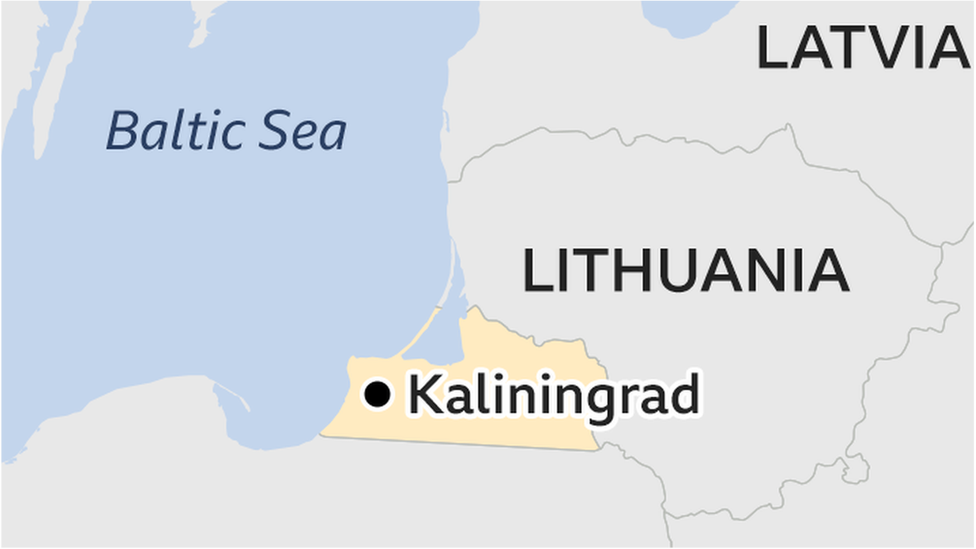
Situated in north-eastern Europe with a coastline along the Baltic Sea, Latvia has borders with Estonia, Russia, Belarus and Lithuania. It has linguistic links with Lithuania to the south, and historical and religious ties with Estonia to the north.
Not much more than a decade after it regained independence during the demise of the Soviet Union, Latvia joined the European Union and Nato in 2004.
For centuries Latvia was primarily an agricultural country, with seafaring, fishing and forestry as other important economic factors.
Like its Baltic neighbours, Latvia has made a rapid transition to the free market since the early 1990s. It adopted the euro as its currency in 2014.
Some 24% of the population is primarily Russian-speaking, and Russian propaganda efforts in this community are a cause of concern for the Latvian authorities. Since Russia's invasion of Ukraine in 2022, Latvia has banned all Russian broadcast channels.
- Read more country profiles - Profiles by BBC Monitoring
REPUBLIC OF LATVIA: FACTS
- Capital: Riga
- Area: 64,589 sq km
- Population: 1.8 million
- Languages: Latvian, plus Livonian, Latgalian
- Life expectancy: 70 years (men) 80 years (women)
LEADERS
President: Edgars Rinkevics

Latvia's long-serving foreign minister Edgars Rinkevics became the first openly gay head of state of a European Union nation after being elected by parliament to the post in July 2023.
Mr Rinkevics had served as foreign minister since 2011. Although generally a ceremonial position, Latvia's president can veto legislation and call referendums.
In his inaugural speech, Mr Rinkevics vowed to continue supporting Ukraine's war effort against Russia. He said Latvia's foreign policy "does not have time for mistakes", adding he would act "quickly, decisively and wisely".

Prime minister: Arturs Krisjanis Karins
Arturs Krisjanis Karins became prime minister in January 2019 at the head of a coalition of five conservative and liberal parties, excluding the pro-Russia Harmony party that had emerged as the largest bloc in parliament after the October 2018 elections.
Mr Karins was born in the US to Latvian parents, and earned a doctorate in linguistics before emigrating to Latvia and going into business.
He was elected to parliament in 2002 as an MP for the centre-right New Era Party, and went on to serve as economy minister before becoming a member of the European Parliament.
He was the conservative Unity party's candidate for premiership at the 2018 election.
MEDIA
The media operate freely, with few legal restrictions. A law provides prison terms for libel and incitement of racial hatred.
Newspapers - all of them privately-owned - reflect a variety of political views. Many titles have suffered declining circulations.
TIMELINE

Some key events in the history of Latvia:
1800s - Latvia is under Russian rule.
1918 - Following the Treaty of Brest-Litovsk between Russia and Germany in March and the Allied armistice with Germany in November, Latvian National Council proclaims independence.
1918-20 - Latvia fights to establish its independence against the Soviet Russian and German armies.
1920- Peace treaty with Soviet Russia.
1934 - Prime minister Karlis Ulmanis seizes power following succession of unstable governments.
1940 - Soviet Union annexes Latvia, along with neighbouring Estonia and Latvia. Mass deportations to Siberia and Central Asia.
1941 - Nazi Germany invades. Some 70,000 Latvian Jews are killed by Nazi death squads and Latvian paramilitary units.
1944 - Soviet Army returns, heralding further waves of deportations and repression of resistance to Soviet rule.
1986 - First major anti-Soviet demonstrations held by nationalist and environmental activists.
1991 - Referendum produces large majority in favour of independence. Parliament declares the full restoration of independence.
1994 - Last Russian troops leave.
1999 - Vaira Vike-Freiberga is elected president - the first woman president in eastern Europe.
2004 - Latvia joins European Union and Nato.
2006 - New citizenship law requires applicants to pass Latvian language test.
2012 - Referendum on giving Russian joint official language status rejected by a large margin.
2014 - Latvia joins the eurozone.
2015 - Nato reinforces its presence in the Baltic states.
2022 - Russia invades Ukraine. Latvia declares state of emergency along its border with Belarus over sharp climb in illegal border-crossing attempts.

- Published29 March 2023
- Published13 February
- Published22 August 2023
- Published25 March
- Published26 February
- Published22 August 2023
- Published22 August 2023